The "W" Word

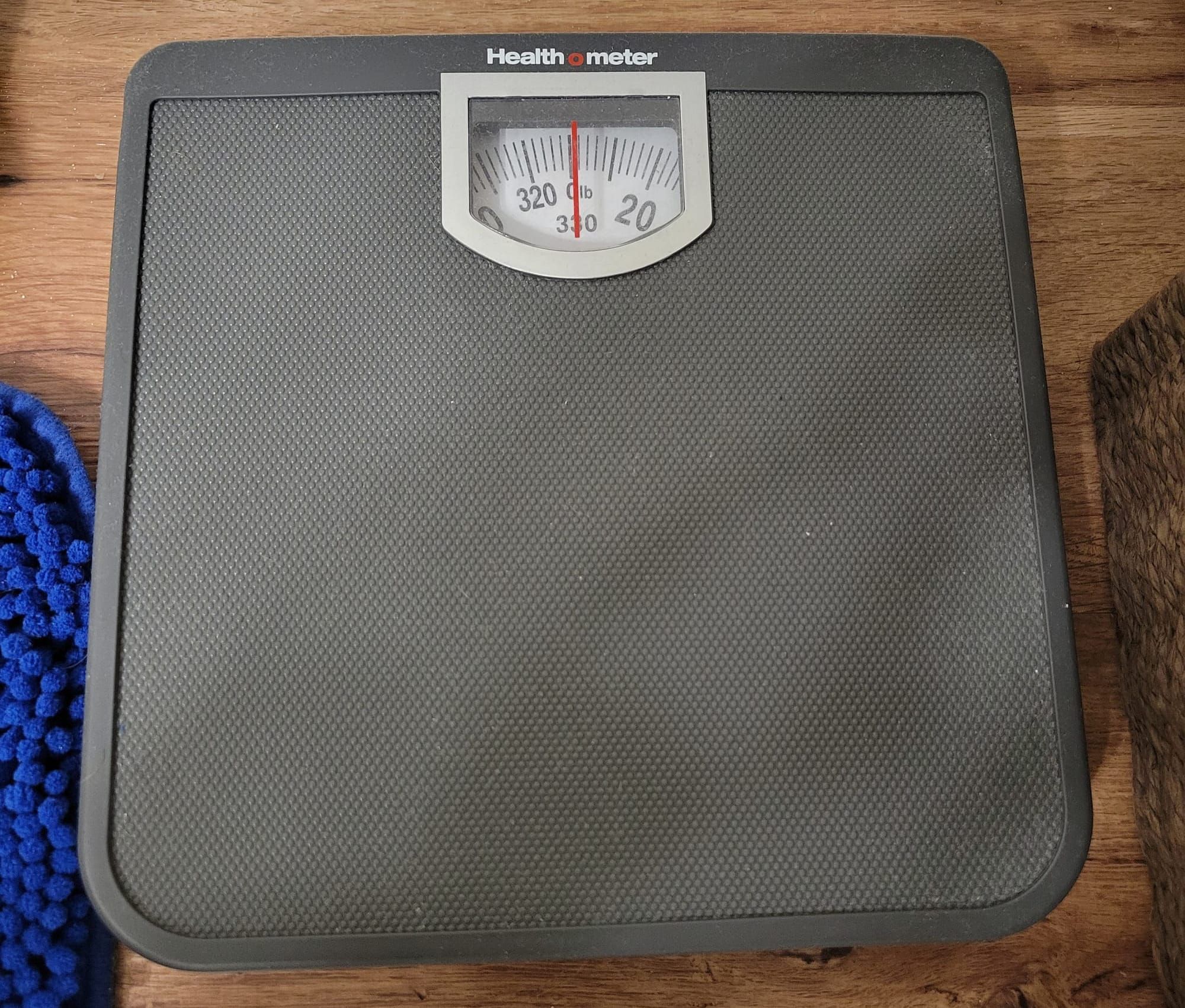
I'll preface my story with the acknowledgement that weight - gravity's effect on our body - can be a sensitive subject. This is a collection of my thoughts and experiences with weight loss and management.
To my knowledge, I do not suffer from any conditions or complications that make losing weight more difficult, but I am not one of the genetically blessed who have never dreaded stepping on a scale. Contrarily, I seem able to gain a pound or two simply by smelling a cookie. Of course, this is/was usually followed by eating said cookie.
I have been fortunate enough not to endure external weight-related pressures. My parents would not restrict my diet, nor have I been the victim of bullying (as far as I'm aware). The internal pressure was ever-present, but - apparently - never to the extent needed for me to lose weight.
Overweight Athletes
I started playing tennis when I was about five. My dad would take me out, throw me some balls, and teach me small stuff, like where to stand and swing without hitting myself. I played through high school, college, and now play (coach) as a career. I'd wager I've been classified as "overweight" for 90 percent of this time. Apart from a short stint in high school when I worked out daily with a fitness coach, and before I gained weight in elementary school (it all started with those darn husky pants), I was the "big boy" on the court. The player a coach looks at and says, "Just move him around."
I got used to running down drop shots. I learned to hit a deep topspin ball to give me time to recover. My anticipation improved, allowing me to compete with faster opponents. Once I slimmed down a tad (remember the part about the fitness coach?), I was able to use these skills to become a fairly effective baseliner. Never the fastest, but quick enough. Never the strongest, but tough enough. Never the most resilient, but tenacious enough. And thus, I settled for playing tennis well enough, never striving to attain greatness through physical conditioning. But let me give myself some credit; I was a good competitor. I did what it took to win. I fought back from match points down, I made men half my size (comparing BMI) cramp, and I never watched a ball pass me without running for it. I wouldn't always get there, but I always hustled.
In college, my weight generally fluctuated between 170 and 175 pounds. At just under 5'8'', this placed me firmly in the "overweight" category. I was the biggest guy on the team by far. Not always the most out of shape or the slowest, I don't know what those guys were doing, but the visibly largest. Not only did this sometimes take a toll on my confidence, but it gave - or should have given - my opponents the mental edge. I looked weak. Gut protruding, soft arms, legs lacking definition. Not built like your typical tennis player.
College as an Obstacle
So why didn't I do anything about it? I knew that being in better shape would help me win. Well, I would blame it on two reasons - and blame is being used loosely here because I take full responsibility for this shortcoming. One, I didn't know how to lose weight, or what my goal should be. Two, I spent a lot of my time as a STEM student stressed, sleep-deprived, and chasing deadlines. I couldn't afford to add hungry to that list, too.
I did "try" a few times to get in shape during college. I worked out and ran quite a bit after my freshman year - until slipping during one of the runs and overextending my knee. Got a gym membership my junior year while studying abroad and had some success despite eating chocolate bars for dinner almost nightly (God, do I miss Northern Ireland's Cadbury chocolate). I even picked up running the summer before my senior season. Each time it helped briefly, until the weight came back once tennis season started.
I couldn't stop eating. I never said no to a big meal and dessert from the dining hall. I felt like I should eat well since I needed energy for tennis, and that I deserved a treat for managing the stress of classes. For both reasons, I don't think I could ever have lost weight while in college. Food was readily accessible, and my discipline nonexistent due to burnout.
Obviously, the weight just melted off after graduation, right?
Losing Weight in the Real World
I graduated from Centre College in May of 2024. I retained my perpetual eating habits for the next year and a half. If you ever need advice on cheap, unhealthy, oversized meal portions, just let me know (the Domino's app is a great place to start). But in October of 2025, I got tired of looking in the mirror and feeling ashamed without at least trying to change. I'm not getting any younger, and I'm sure we've all heard how much harder it is to lose weight as we age. So, I started a strict diet for the next three months: little to no processed foods, water only, and just one cheat day every 5 weeks.
By Christmas, I was under 155. Effective? Without a doubt. Sustainable? Probably, but mentally taxing and harder - for me - to enjoy life. Those three rules might sound simple and easy to follow, but the restrictions they pose are challenging. I cut out bread, refined sugar, dairy, most processed meats, and basically anything that can be bought in a wrapper. I had a few exceptions, though. My favorite restaurant - Gumbo Yaya - and tortilla chips were still on the menu. Tortilla chips only because I needed something to eat salsa with. My diet, more or less, became unflavored oatmeal, plain nuts, fresh fruit, tortilla chips with salsa, and rotisserie chicken.
The beginning was hard. I had to learn to be hungry, to stay hungry. I had strong cravings the first three weeks and wasn't sure if I'd be able to keep it up. On top of the diet, I continued going to the gym 2-3 times a week while getting my regular cardio and exercise from my work on off days. It's difficult to go from "I just worked out, I deserve an ice cream," to "Can I not eat for the rest of the day after finishing this lift?"
But for me, that's what it took. The first 5-week stretch truly opened my eyes to food relationships. I had never resisted the urge to eat before; anytime I was hungry, I ate. Worse, even, anytime I had access to something even remotely tasty, I ate it. I had to learn to eat for sustenance, not pleasure.
Lessons/Thoughts
I am currently stalled a little below 150. My goal is to get under 140, but I've loosened up the diet the past few months, so progress has slowed.
I am fortunate enough to have the ability to adjust my diet and habits like this. I cannot imagine working a full-time job and having kids, all while avoiding the most common foods in the U.S. and going to the gym regularly. I won't act like losing weight is easy, and for some people's situations, it may not be feasible without major sacrifice.
I will act like losing weight is a discipline matter. Eat less. It isn't easy, it isn't fun, but it works. And I don't mean cutting out your midday snack or eating less cake after dinner. I mean making a concerted effort to avoid calorie-dense foods, eat smaller portions, and remain in a calorie deficit for weeks at a time. Again, this isn't meant to be health advice, and I do not back up my claims with research or studies, but I believe this is the easiest way to drop some pounds. I chose to do a low-processed diet because it worked for me. By saying no to processed foods, I eliminated my biggest weaknesses of bread and sweets.
How My Body Responded
Unfortunately, it does make your body feel better when you eat healthy, drink plenty of water, stretch, and exercise frequently. Doctors might be on to something. After the initial shock period, I felt more energized each morning and saw a significant reduction in my chronic headaches. Playing tennis for extended periods became easier, and my cardio improved without even working at it. Knee pain from college, which surgery did not help, eased significantly. I also have to tie the waistbands on my shorts now, but that's a bit less relevant.
It's become harder to continue eating/living this way. It wasn't until I committed to dieting that I saw how many of my staple foods are just... not great for my body. I love pizza, fried chicken, ice cream, roasted/candied nuts, yogurt, and especially bread. I can't list all of my favorite foods, I'd run out of time in the day, but I hope you get the idea. Oh, and how such foods savor on your tongue after not eating them for so long; don't get me started.
I'll leave you with my most important revelation: eating healthy becomes eating normally. I don't have as strong of cravings anymore, it's become easier for me to say no to temptations, and I enjoy "healthy" foods more than before. It's incredible how resilient, how adaptive, the human body is.